
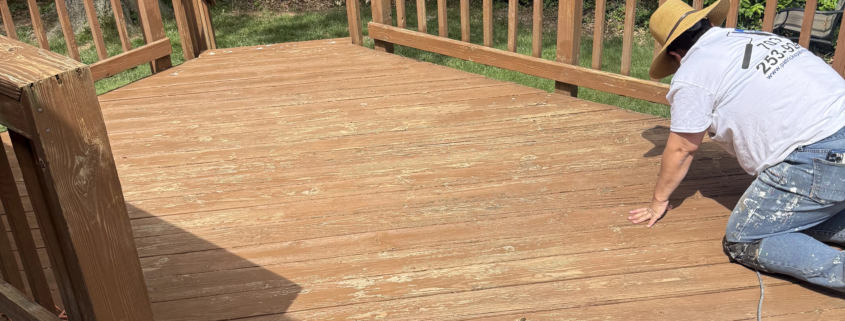
Deck Staining & Pressure Washing in Northern Virginia: Keep Your Outdoor Space Protected
Northern Virginia’s outdoor living culture is real. Your deck isn’t just a construction feature; it’s an extension of your home. It’s where you grill on Sunday afternoons, set out chairs for neighbors, watch your kids play on summer evenings. It’s your outdoor room. But Virginia’s climate is relentless on decks. Humidity coats them with mildew. Spring pollen blackens the wood. UV exposure fades the stain from the south and west sides. Wood splinters. Composite decks lose their color. A season of neglect turns your outdoor space from inviting to dingy.
That’s why deck staining and pressure washing matter in Northern Virginia. It’s not cosmetic; it’s maintenance. It’s the difference between a deck that lasts 15 years and one that lasts 5.
Why Northern Virginia Decks Take a Beating
Virginia’s location on the Potomac River and its subtropical-leaning climate create specific deck challenges.
Humidity is constant. From May through September, your deck is fighting moisture. Wood absorbs water. Mold and mildew grow in the moisture. Composite decks develop green and black stains. This happens faster in Northern Virginia than in drier states. Your deck in Burke or Alexandria sees humidity that similar decks in Arizona or Colorado don’t face. That changes the maintenance calendar.
Spring pollen is biblical. March through May, pollen from trees lining the Potomac coats everything. Your deck turns black with pollen and mildew growth. It’s not just unsightly; it’s slippery. Your kids can fall. Mold spores are bad for your lungs. If you live in Arlington, Springfield, Vienna, or anywhere in the metro, you know this season. Your deck gets a black film by mid-April.
UV exposure on west and south-facing decks fades the stain. If your deck gets afternoon sun from May through September, the stain on those sides will fade 12 to 18 months before the north side does. Uneven color looks sloppy. Even fading means you’re due for restaining sooner than you’d like.
Winter is hard on the wood. Freeze-thaw cycles crack the wood fibers. Salt from winter roads (if your deck’s near a road) accelerates deterioration. Snow and ice sit longer in Virginia than farther south but less long than up north. Your deck gets the worst of both worlds: wet freeze-thaw cycling, long periods of dampness, and salt exposure if you live near Route 66 or I-95.
Wood species matter. Most Northern Virginia decks are pressure-treated pine or cedar. Both are affordable and common. Cedar’s prettier but less durable. Pressure-treated pine is tougher but needs stain, not sealer, to stay healthy. Some homes have IPE or mahogany in high-end Alexandria or Arlington properties. Those woods are denser, more weather-resistant, and still need maintenance every 2 to 3 years.
When to Stain, When to Seal, and When to Pressure Wash
These terms get confused because people use them interchangeably. They’re not the same thing.
Pressure washing removes dirt, pollen, mildew, and algae. It’s your cleaning step. For Northern Virginia decks, a professional pressure wash happens once a year, typically in spring after pollen season or in early fall. The pressure and water temperature are important. Too much pressure damages the wood; too little doesn’t clean it. Professional equipment is tuned right. Homeowners with consumer-grade pressure washers (which is most people) go too hard and create a fuzz on the wood grain that looks terrible and weakens the surface. Hire this out.
Sealing is a transparent coating that protects wood from water absorption but doesn’t change color. It’s typically used on cedar decks where you want to preserve the wood’s natural look and color. Sealing lasts 18 to 24 months in Northern Virginia because of the humidity. After that, water sits on the surface instead of beading up. The deck’s vulnerable again.
Staining combines protection with color. A quality deck stain in Northern Virginia is semi-transparent (you see the wood grain) or opaque (it covers the grain like paint). It protects against water and UV. A high-quality stain lasts 2 to 3 years on a north-facing deck and 18 to 24 months on south and west-facing areas, depending on how much sun exposure they get.
For Northern Virginia, here’s the rhythm most deck owners should follow:
Spring (April/May): Pressure wash. Remove winter grime, pollen buildup, and any mildew. This is non-negotiable. Your deck won’t look good without it.
Late spring or early summer (May/June): Assess the stain. Is it still beading water? (Test by splashing water; if it beads, the protective layer is intact.) If it’s beading, you’re fine for another year. If water soaks in, it’s time to restain.
Fall (September/October): Pressure wash again if heavy pollen or sun exposure happened. Consider restaining at this time if the stain looks faded or dull. Fall is ideal because: cooler temperatures help stain cure properly, you’re less likely to have rain during the stain’s curing window, and your deck is refreshed before fall and winter weather.
Winter: Don’t pressure wash. Don’t restain. The deck’s harder to dry, stain won’t cure properly in cold, and the wood’s already stressed. Let it rest.
Wood vs. Composite Decks: Different Care, Same Principle
Pressure-treated wood and cedar require stain every 2 to 3 years in Northern Virginia and annual spring pressure washing.
Composite decks (made of wood fibers and plastic) need pressure washing annually but don’t need staining. They come with a factory finish that lasts 3 to 5 years. After that, the color fades and surface stains become stubborn. You can’t stain composite the way you stain wood. Some composite manufacturers offer color restoration products, but they’re expensive and temperamental. The best approach is annual pressure washing at the right pressure level (lower than for wood) to keep the deck looking fresh. If you have composite, ask your manufacturer what pressure level they recommend. Too much pressure scours the surface.
The catch: once composite starts to fade, there’s no magic fix. You’re either accepting the faded color or replacing the decking. Prevention through annual pressure washing buys you years of better appearance.
DIY Pressure Washing: Why It Usually Goes Wrong
Consumer pressure washers are 2,000 to 3,500 PSI. Professional equipment is 3,500 to 4,500 PSI with temperature control (hot water or cold water, depending on the surface). The difference matters enormously.
When homeowners pressure wash their decks, they usually go at full power because they want to blast away years of buildup. That pressure damages the wood fibers. You end up with a fuzz on the grain, splintered edges, and weakened surfaces that splinter more in the future. It looks rough, not clean.
Temperature control also matters. Hot water cleans better and faster. Cold water just hammers the surface. Professional crews use hot water at the right pressure and distance to get the deck clean without damage.
The angle of the nozzle and distance from the deck matter too. Get it wrong and you’re gouging your deck. Get it right and the deck is clean and the wood fibers are intact.
Then there’s safety. A pressure washer is genuinely dangerous. High-pressure water can cut skin. Holding a vibrating nozzle for hours leads to repetitive strain. Standing on a deck while pressure washing is a slip-and-fall waiting to happen.
Hire a professional. It costs $300 to $600 for a typical Northern Virginia deck, and you get a safe, properly cleaned surface. That’s time and money well spent.
Pressure Washing Beyond Decks
Pressure washing in Northern Virginia goes beyond wood decks. Your driveway, concrete patio, brick siding, pavers, vinyl siding, fencing, and fence railings all benefit from annual pressure washing.
Concrete driveways get algae and mold growth from moisture and shade. Pressure washing restores the surface and prevents the growth from accelerating.
Brick siding on Northern Virginia homes needs careful pressure washing. Too much pressure damages the mortar. The right technique cleans the brick without destroying the joint integrity. Professional crews know the difference.
Pavers,whether in a patio or walkway,can shift and trap water if not maintained. Pressure washing removes buildup and keeps the surface level and safe.
Vinyl siding shouldn’t be pressure washed at high pressure (it dents), but low-pressure washing keeps it clean and extends its life.
Fencing in Northern Virginia’s climate gets mold and mildew. Annual pressure washing preserves the fence and keeps it looking intentional rather than neglected.
The Annual Deck Care Calendar for Northern Virginia
March/April: Call for pressure washing. Spring is the busy season, so book early.
April: Pressure wash happens. You see what the stain situation is. If it’s faded or water soaks in, schedule restaining for May or June.
May/June: If needed, restain. Allow 48 hours of dry weather after staining before using the deck.
June-August: Enjoy your deck. Monitor for any spots that might need touch-up staining (low spots that pool water, south-facing areas that fade).
August/September: Plan for fall pressure washing and possible restaining if the summer sun was particularly harsh.
September/October: Pressure wash and restain if needed.
November-February: Leave the deck alone. Let it rest through winter. Don’t pressure wash in the cold; stain won’t cure right.
FAQ
How often should I pressure wash my deck in Northern Virginia? Annually in spring (April or May) after pollen season. If your deck’s in full sun or gets heavy use, a fall wash in September helps too. Most Northern Virginia homeowners do one spring wash and call it good.
Can I pressure wash my composite deck? Yes, but at lower pressure than wood. Ask your deck manufacturer for their recommended PSI (usually 1,500 to 2,000). Too much pressure scours the surface and creates a rough texture. Use cold water, not hot.
How long does deck stain last in Northern Virginia? Semi-transparent or opaque stain lasts 2 to 3 years on a north-facing deck and 18 to 24 months on south and west-facing areas because of higher UV exposure. Sealed (not stained) decks last 18 to 24 months in Virginia’s humid climate.
What’s the best time to restain a deck in Northern Virginia? Late spring (May/June) or early fall (September/October) are ideal. Cooler temperatures help stain cure properly, and you need 48 hours of dry weather after staining. Avoid summer heat (stain cures too fast and gets blotchy) and winter cold (stain won’t cure).
Can I pressure wash my deck myself, or should I hire someone? You can, but it’s easy to do wrong. Consumer pressure washers are too powerful (they damage the wood), and the technique matters. For $300 to $600, a professional gives you a properly cleaned deck without damage, safety risk, or your time. It’s worth it.
Ready to Protect Your Deck?
Northern Virginia’s climate demands deck maintenance. Annual pressure washing and timely restaining aren’t optional if you want your deck to last. We’ve handled hundreds of decks across Alexandria, Arlington, Springfield, Burke, Merrifield, Vienna, Fairfax, and Mount Vernon. We know the climate. We know the wood. We know the stains and sealers that work here.
Call Patrick at (703) 253-9268 or visit www.patrickspainting.com (5.0 rating, 437 reviews, 17 years) to schedule a free deck inspection and estimate.
Patrick’s Painting & Home Improvement | www.patrickspainting.com | (703) 253-9268